


Minnesota entered the union on 11 May 1858. Although known as the Land of 10,000 Lakes, it has over 11,000. By comparison, its neighbor Wisconsin is home to thousands more. Alaska, however, has nearly three million inland bodies of water larger than five acres.[i] For our country’s final territory within the Great Lakes watershed, my article will reflect on Biblical sources related to animals who can thrive near our inland freshwater seas.
A president of St John’s University (SJU) in Collegeville, Father Colman Berry (OSB), initiated a campaign to preserve primary sources in Benedictine houses: Monastic Manuscript Project (1964).[ii] Over time, its scope broadened to encompass at-risk books associated with various traditions on multiple continents.[iii] SJU’s Hill Museum & Manuscript Library (HMML) has amassed microfilm facsimiles by the tens of thousands and digitized nearly half a million examples. Their Special Collections department also keeps original manuscripts.
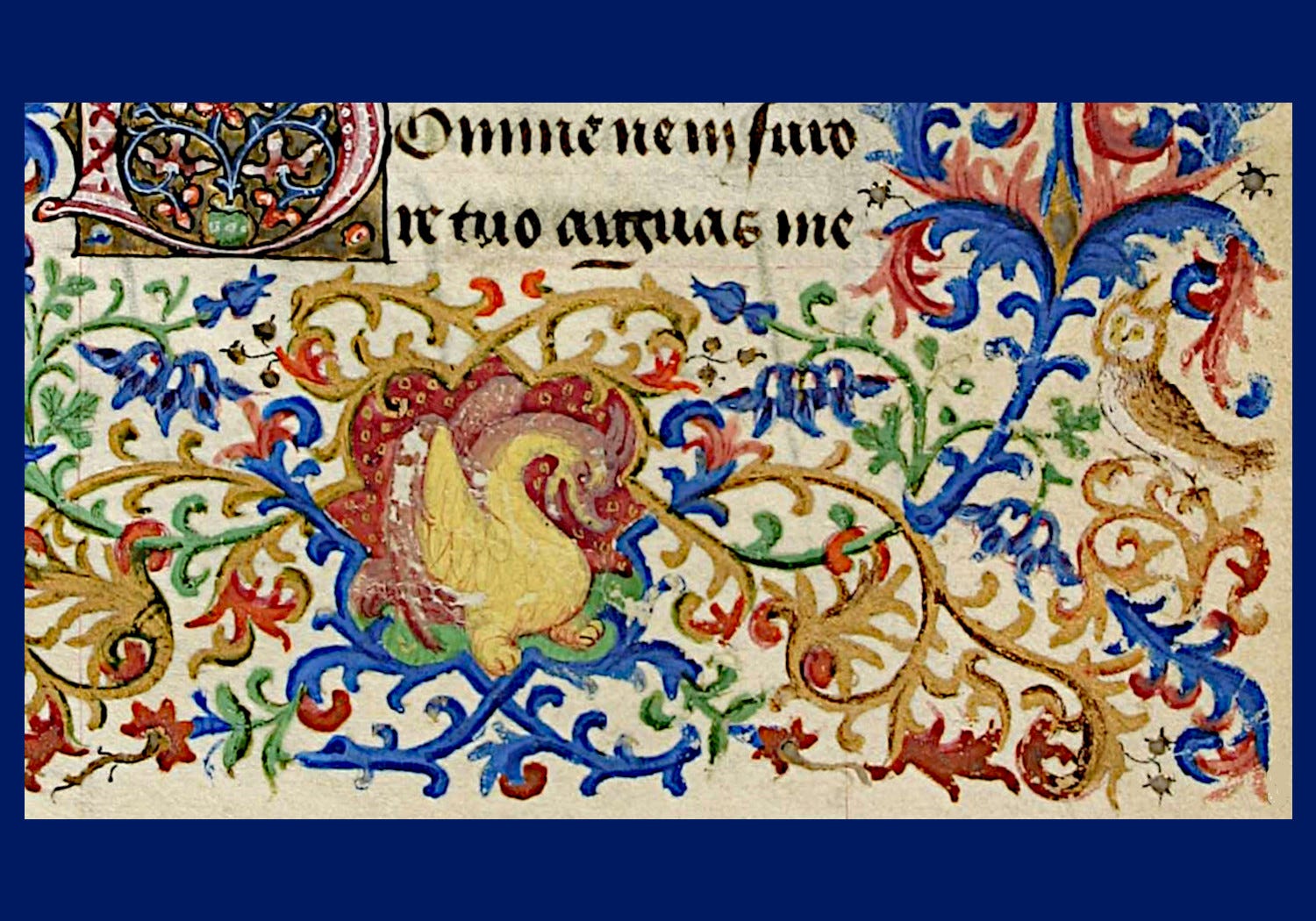
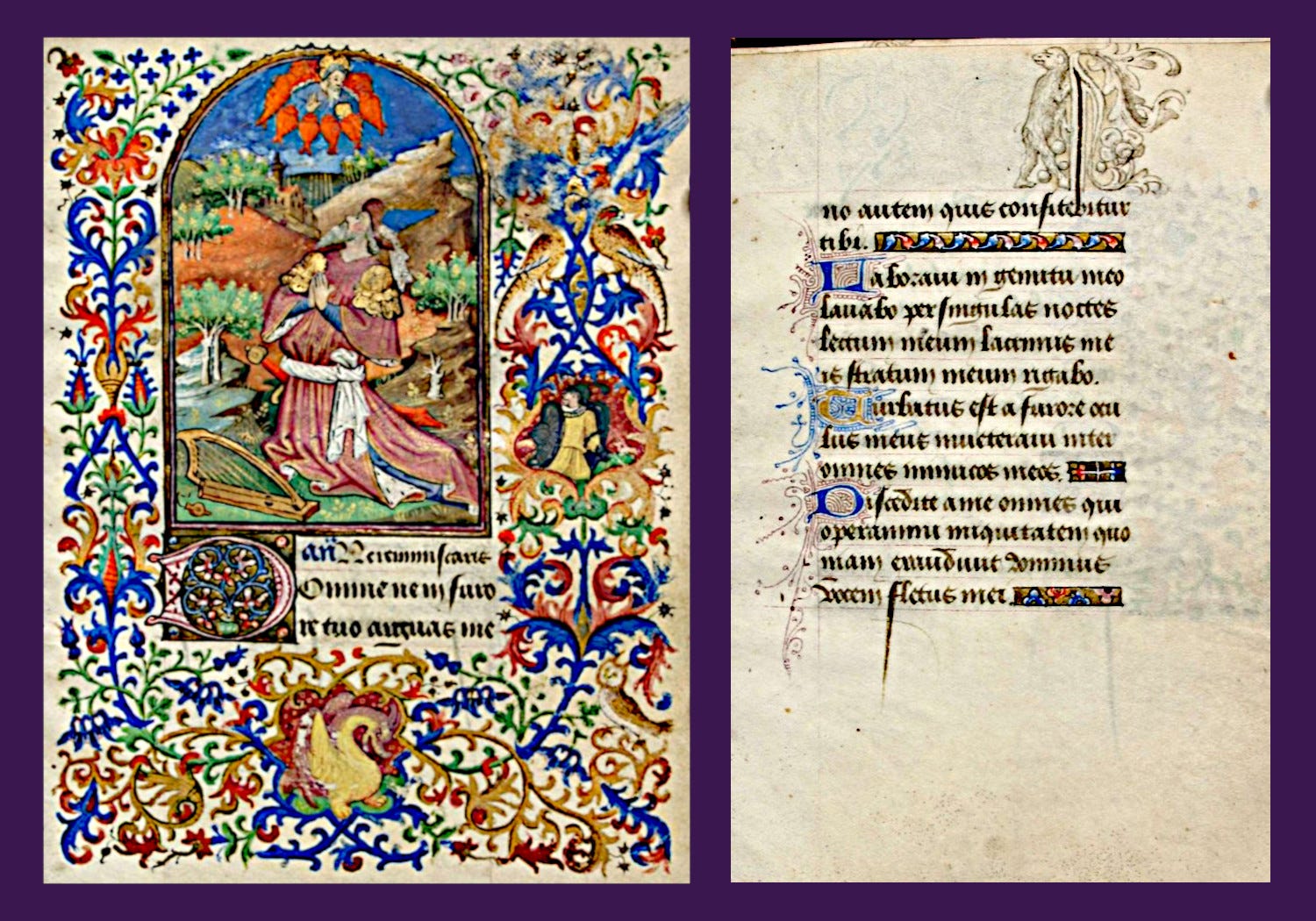
In a book of hours, a fifteenth-century French artist nestled an owl among acanthus leaf scrolls at the Seven Penitential Psalms’ opening (illustrated above).[iv] Integrating a specific bird reveals both an interest in the natural world and careful attention to the text (images below).[v] Several verses into this ancient song, King David prayed: “… All night long I flood my bed … and drench my couch with tears. … the Lord has heard my weeping” (Psalm 6:6b and 8b, NIV).[vi] While following a standard iconography that represents David praying in a daytime landscape, the illuminator highlighted his prayer’s nocturnal setting by including an owl in the margin.
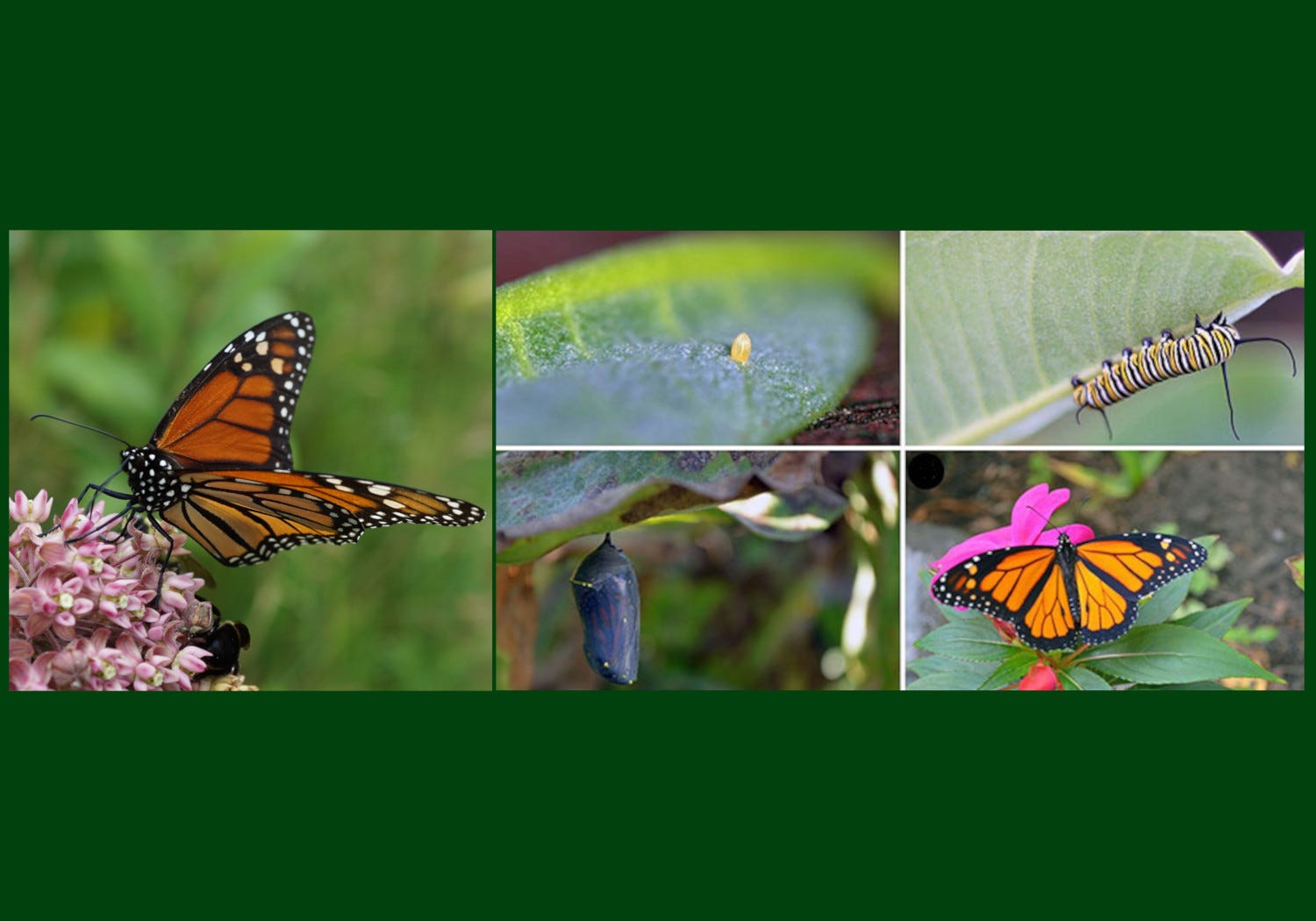
Along with conserving medieval—and predominantly monastic—manuscripts, SJU has promoted traditional scribal practices. The state’s most notable Scripture publishing project produced facsimiles of the first hand-copied Scriptures Benedictines have commissioned in 500 years: the St John’s Bible (1998-2011).[vii] Richly illuminated in Wales, this seven-volume calligraphic masterpiece on parchment is displayed at the SJU campus not far from HMML.[viii] Honoring their project’s future home, artists painted subjects native to the New World, such as the lifecycle of monarch butterflies (see below).[ix]
Until now, Vernacular Bible Explorer has featured Scriptural sources conserved in libraries, museums, schools, and domestic settings that ranged from palaces to rural homes. However, collections at places of healing, such as the Mayo Clinic in Rochester, include Biblical content.[x] Overall, their artistic exhibits focus on topics of broad, non-sectarian appeal. Cincinnati’s Rookwood Pottery tiles for this premier medical complex are not meant to promote a particular form of religious expression, but the Christian faith journey of their founder, Maria Longworth Nichols Storer (1849-1932), is not a secret.[xi] Since contemporary artists’ spirituality influences their work, I will mention another instance.
Andy Warhol was a practicing Byzantine Catholic, and his Endangered Species series on view at the Mayo Clinic suggests gratitude for the diversity of God’s Creation.[xii] He donated 100 of these screen prints, encouraging conservation organizations to hold fundraising auctions that could benefit wildlife. Among these imperiled animals, Warhol rendered the African elephant.[xiii] Its imposing stature suggests one theme on the minds of Mayo patients and visitors: fighting battles they would not choose. The deuterocanonical, or apocryphal, Book of First Maccabees mentions how these formidable animals were used in ancient battles. Provoking the “elephants to fight, they shewed them the blood of grapes and mulberries” (6:34, KJV; see also 35-37).[xiv] Unfortunately, these elephants are still endangered.[xv] They symbolize an ongoing fight for survival. Please post your reflections on this material below. I invite readers to share other examples connected with Biblical history in Minnesota.
[i] https://www.worldatlas.com/lakes/10-us-states-with-the-most-lakes.html, accessed August 2026.
[ii] https://hmml.org/about/history/ and https://manuscriptroadtrip.wordpress.com/tag/hill-museum-and-manuscript-library/, accessed August 2026.
[iii] For an overview, see https://hmml.org/collections/. Of particular interest for scholars of vernacular Scriptures, note also: https://hmml.org/collections/eastern-christian/; https://hmml.org/collections/western-european/; and https://hmmlvoobus.org/, accessed August 2026.
[iv] HMML, Bean MS 2, third quarter of the Fifteenth Century, Rouen(?). Many thanks for this public domain work’s images online, courtesy of HMML. See f. 109r at: https://www.vhmml.org/readingRoom/view/510546, accessed August 2026.
[v] Appreciate the public domain paintings from ff. 109r and 110r, posted by HMML at: https://www.vhmml.org/readingRoom/view/510546, accessed August 2026.
[vi] The modern Vulgate reads: “… lavabo per singulas noctes lectum meum; lacrimis meis stratum meum rigabo. … quoniam exaudivit Dominus vocem fletus mei.” See https://www.biblehub.com/vul/psalms/6.htm, accessed August 2026.
[vii] https://saintjohnsbible.org/how-it-was-created/ and, note also American contributors like Suzanne Moore, https://saintjohnsbible.org/creative-team/. In 1938, an anthology of Scripture passages was published in Minneapolis by Caradoc J. Morgan. Margaret Hills, ed., The English Bible in America (New York: American Bible Society and New York Public Library, 1961) p. 384, no. 2366; for a copy, search: https://www.abebooks.com/Peoples-Bible-Anthology-King-James-Version/32372401616/bd, accessed August 2026.
[viii] https://www.loc.gov/exhibits/stjohnsbible/stjohns-exhibit.html, accessed August 2026.
[ix] Please find this twenty-first-century manuscript’s illustration in a Library of Congress online exhibit: https://www.loc.gov/exhibits/stjohnsbible/stjohns-exhibit.html. Since the St John’s Bible is under copyright, public domain images supplied by the National Park Service are included here with thanks: https://npgallery.nps.gov/AssetDetail/3d96a7f3-6f09-4585-9fb7-d88e91813911 and https://npgallery.nps.gov/AssetDetail/6e4803aa-1b85-4ef7-b354-b40b11f18eec#, accessed August 2026.
[x] Their predominantly aesthetic focus is clear: https://alumniassociation.mayo.edu/art-through-the-ages-a-history-of-art-at-mayo-clinic/, accessed August 2026.
[xi] For notes on the founder’s faith journey, please read: https://www.theodorerooseveltcenter.org/encyclopedia/family-and-friends/maria-longworth-storer/, accessed August 2026.
[xii] https://now.fordham.edu/arts-and-culture/a-fordham-take-on-andy-warhols-iconic-catholicism/, accessed August 2026.
[xiii] An example in a museum collection is: https://crystalbridges.org/artworks/2015-38-7, accessed August 2026.
[xiv] https://www.kingjamesbibleonline.org/1-Maccabees-Chapter-6/, accessed August 2026.
[xv] https://www.fws.gov/cites/species/african-elephant, accessed August 2026.
For readers who might like to learn more about the St John’s Bible, here’s a virtual tour link with monarch images and more: https://library.nd.edu.au/sjbtour.