

Explorer’s Tools
Varying Your Bible Reading Program

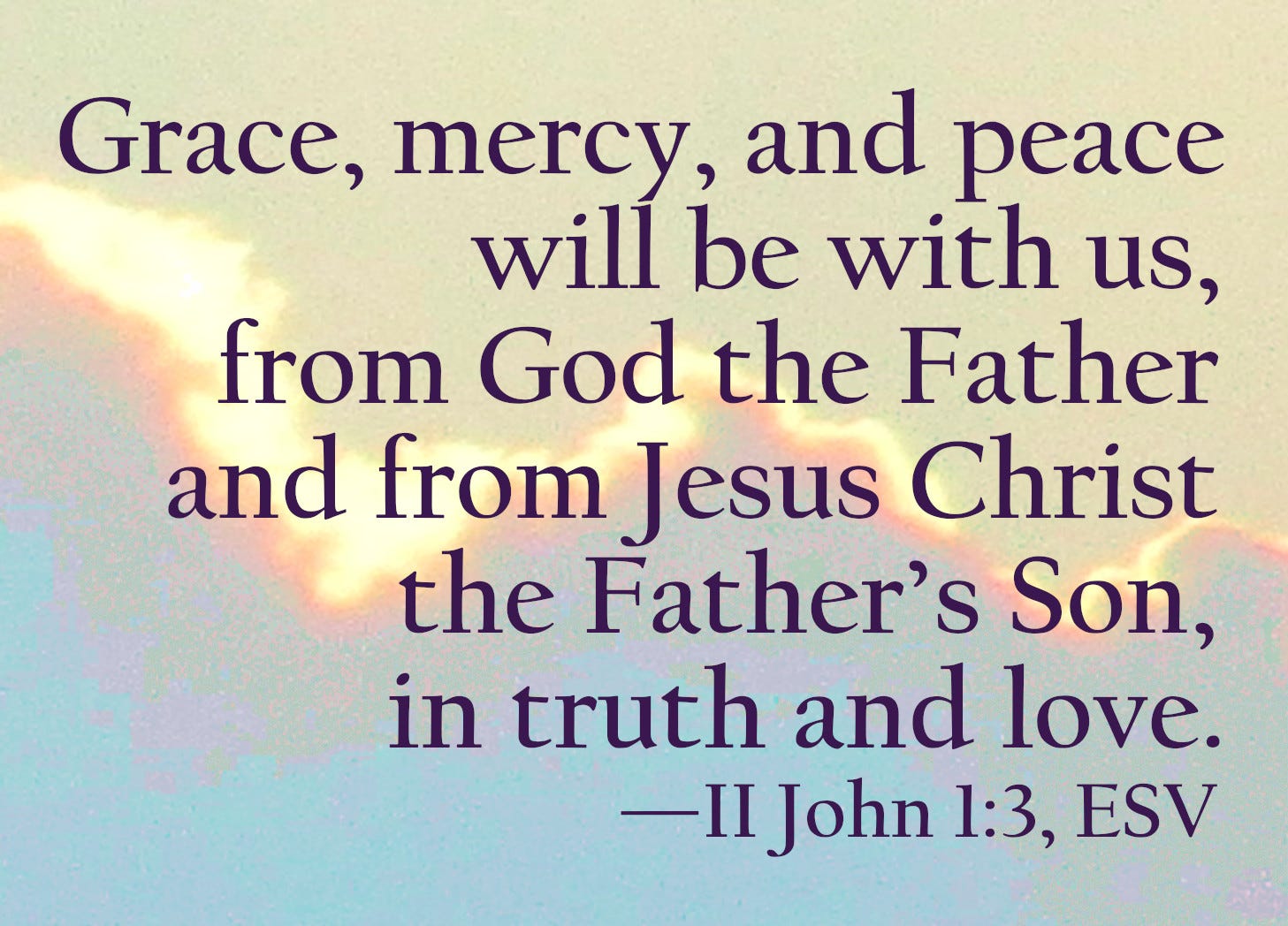
During high school, I began chipping away at my first read-through of Scripture. I awakened to its richness and depth. One memorable promise that spoke to me illustrates this post (see above). My initial plan was making consistent progress each day. It took more than three years to finish books found in the standard Hebrew Bible and Christian New Testament.[i] Early familiarity with the Scriptures inspired me to continue studying what has become my favorite text. Have you ever completed a Bible reading program?
When was the last time you thought about or attempted to read all of God’s Word? Please share in the comments about your experience and discoveries throughout that process. I realized taking small, persistent steps toward accomplishing goals works for me. This is not universally true. If you have a particular religious background, I encourage following the advice of trustworthy leaders in your faith community about approaching the Bible. Or, maybe Scripture is unfamiliar. To complete your education with a survey of Biblical books, keep reading and find methods I have personally used that might be of interest.
Your first decision involves choosing a language and, probably, translation. Wading through Scriptural texts in ancient Hebrew, Aramaic, and Greek is a cherished ideal. If using those languages would stretch your skill sets beyond the comfort zone, thousands of vernacular translations are available online for free. I recommend checking www.BibleHub.com and www.ScriptureEarth.org for options in your preferred language. These resources have helped me figure out which ones belong on my literal bookshelf. And, again, somebody at your church can suggest a particular version.
The second choice focuses on time management. How quickly do you plan to proceed? Many love reading both testaments in a year, which works out to at least 28 chapters per week. Covering a chapter each day requires over three years to complete the entire Bible. A meditative pace, soaking in five verses per day, would take more than a decade to finish.[ii]
What is the best timeline? Scripture includes a challenging example. People stood in this marathon instance: “There was not a word … Moses commanded that Joshua did not read before all the assembly of Israel, and the women, and the little ones, and the aliens who resided among them” (Joshua 8:35, NRSV).[iii] Choose whatever method facilitates meeting your goal. Knowing yourself is key. Honestly taking into account the demands on your time and attention will help you tailor the program’s length to your specific season of life.
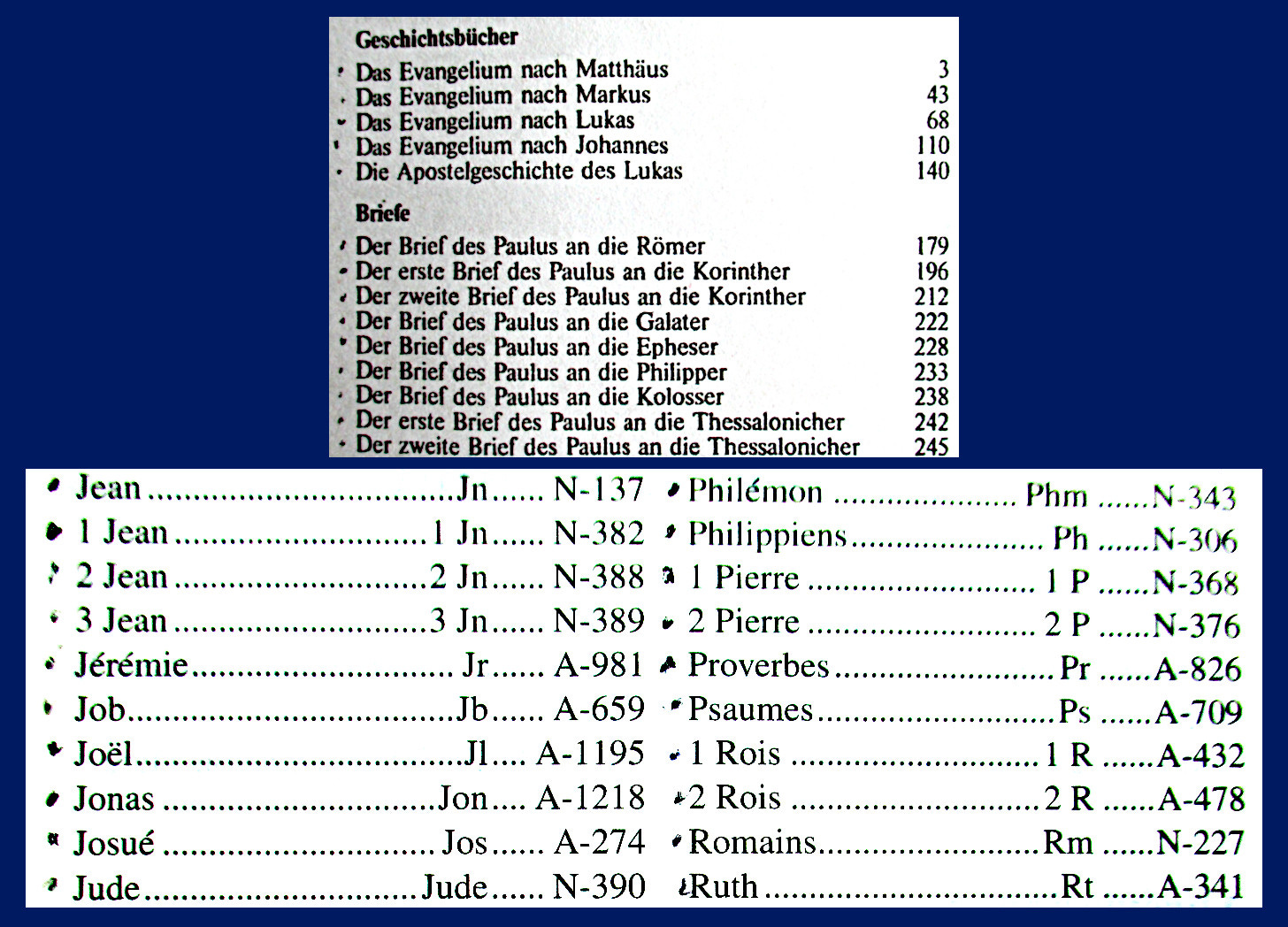
A third decision relates to the sequence in which you cover every section. One typical approach is following the order listed in your Bible’s table of contents (illustrated above).[iv] I placed a dot beside each title to track what I finished. A bookmark helped keep my place among individual chapters. People traditionally use this reading order first.
The typical arrangement is not strictly chronological, because specific genres are grouped together. Detailed reading programs help students of Scripture follow a Biblical timeline. Examples including the shortest standard number of canonical books are found in my endnotes.[v] Chances are good that any version your spiritual leadership recommends may have this type of online plan available. If not, ask your church to devise one and please tell us in the comments below where it is eventually posted.
Perhaps after you have tried one or both of these classic programs, shaking up your approach might provide a fresh perspective. At times, I have prayed about when to read particular books without needing to know precisely how the series will unfold. Asking the Lord for direction invites the Holy Spirit to arrange your progress in ways that may speak to particular life events. During my second read-through, I experimented with this. Trusting a sense of peace about what to cover next, I found specific days matched with resonating passages. For instance, I annotated a page on one “day of my trouble” (Psalm 86:7, WEB) to recall the comfort God’s living Word brought in a challenging moment.
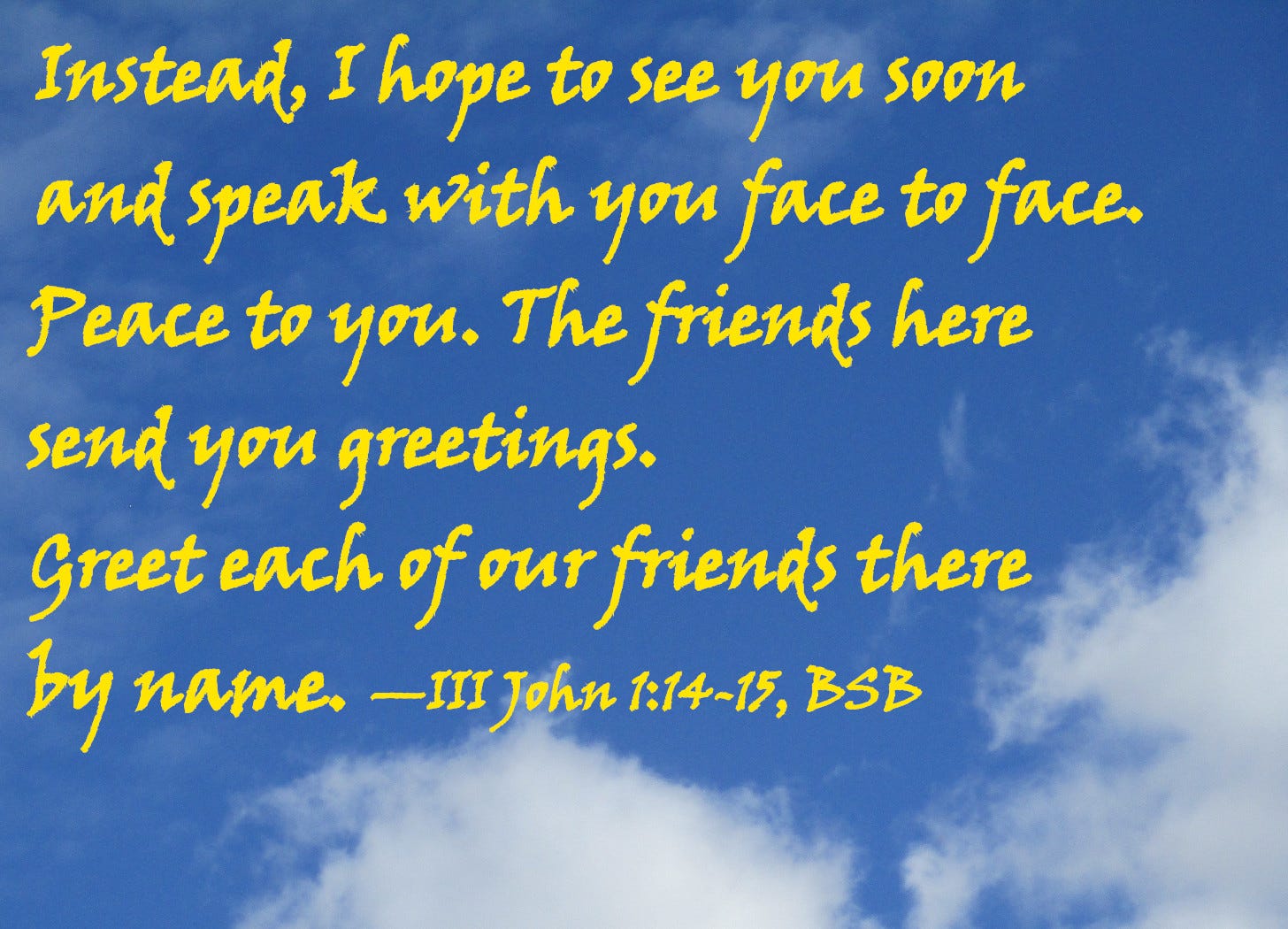
An unusual option could be termed the snowball.[vi] Start with the smallest, Second John, and keep going until you complete the Psalms.[vii] The first week covers six titles: Second John (note my post’s opening illustration), Third John (image above this paragraph), Obadiah, Philemon, Jude (see below), and Haggai.[viii] Reading out of the customary order should raise new questions and provide unexpected juxtapositions. It also enables readers to tackle Scripture’s 30 shortest books, at a chapter per day pace, in less time than people need to work through Genesis, Exodus, and Leviticus.
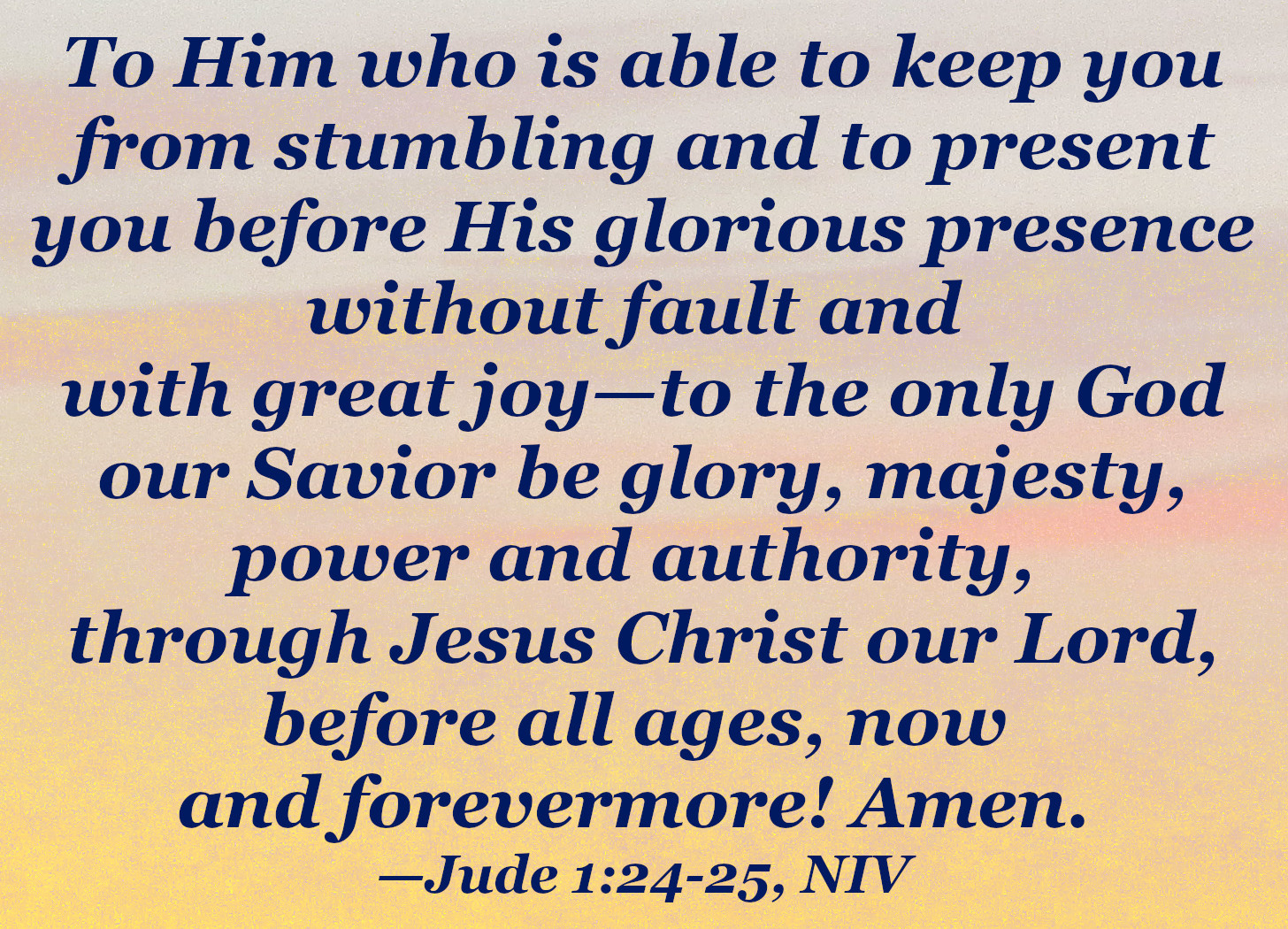
Today is the first time every book of the Hebrew Bible and standard New Testament have at least one verse represented among my collective posts in Vernacular Bible Explorer Substack newsletters, notes, and comments. I hope these references encourage you to discover Scripture on your own. Please share your questions or reflections below about how to finish reading the Bible.
[i] Later, I tackled all, or at least key parts of, both Deuterocanonical and relevant pseudo-epigraphical texts that are not universally accepted. Limiting my milestone of completing the first read-through to the shortest official version of the Bible helped encourage me to study more.
[ii] A 90-day plan sprints through the core books: https://csbible.com/wp-content/uploads/2018/01/CSB90-DayReadingPlan.pdf, accessed May 2026.
[iii] In order to stay awake, I have read while standing, but it can be distracting.
[iv] Photographs by the author. The book order that Biblical translators favor or an alphabetized list might appear, as in these German- and French-language examples.
[v] https://www.biblestudytools.com/bible-reading-plan/chronological.html and https://www.joniandfriends.org/wp-content/uploads/2019/06/Radio_Bible-Reading-Plan_01-19.pdf, accessed May 2026.
[vi] This phrase draws from a widely-used saying or concept that I could not clearly attribute to a single author; see https://www.theidioms.com/snowball-effect/, accessed May 2026.
[vii] Note a chart with the number of chapters in Biblical books here: https://versenotes.org/a-list-of-books-in-the-bible-by-number-of-chapters/, accessed May 2026. Although this resource may not include every book recognized by your faith community, it is one easy place to start.
[viii] Photographs by the author.
I have to admit I have never read the mega bible but when I taught first communion for 14 years, I would read the picture bible which has most of the stories in a condensed version and a lesson at the end. I would read the bible several times throughout the year as I also taught catechism. I felt that the shortened stories allowed me to answer many more questions from the kids that were sometimes not part of that day's story. However, my late father used to read the bible every single day and I still have his copies in Arabic.
I delight to read this! Repeatedly reading the Scripture is the only way to move beyond reading for information to reading for transformation. I have tried all the plans you mentioned and more, often in a different translation each time through. For several years now I have settled into Professor Horner's Bible Reading System (10 chapters a day, from different books, mixing Old and New Testament books, with many fascinating juxtapositions, as you mentioned), changing transaltions each time through. One day I hope to be able to add the Septuagint and the Greek New Testament. God meets me regularly, melting my heart and encouraging my confidence in Him. Teaching others how to read the Bible remains one of my favorite tasks.