

Explorer’s Fuel Series
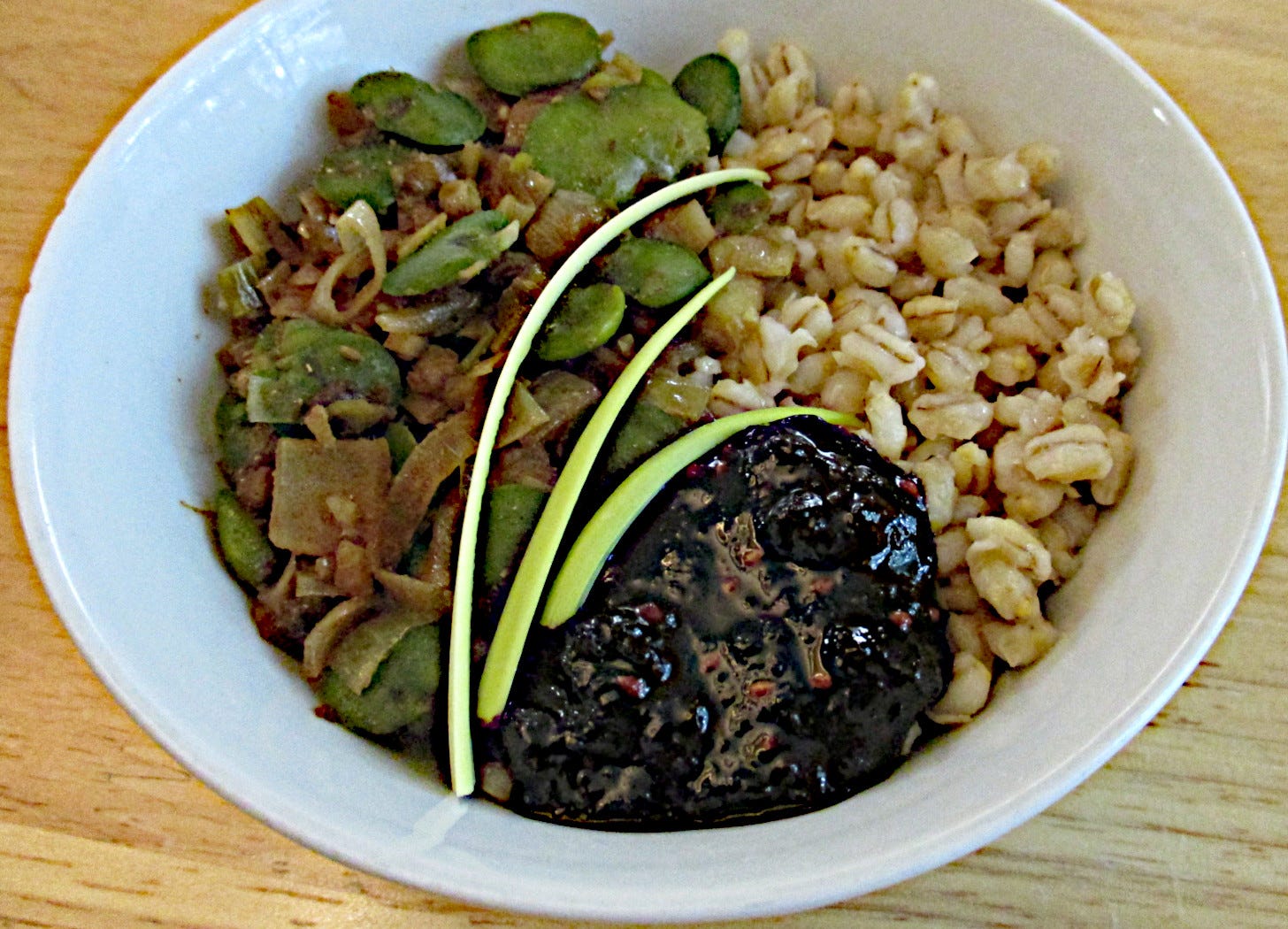
Broad Beans and Barley with Mulberry Sauce

This simple meal tells a story about how God has provided throughout generations. These Biblical ingredients, most of which did not feature in previous fuel series posts, could have reminded King David of specific episodes experienced by his ancestors and himself. That royal Psalmist’s ancient songs reflected on Divine generosity. He wrote: “The eyes of all look to You, and You give them their food in season. You open Your hand and satisfy the desire of every living thing” (Psalm 145:15-16, BSB).
After surviving enslavement in Egypt and being freed by Moses, the Israelites struggled through wilderness conditions. They suffered hunger and thirst. In response, the Lord guided Moses to water sources, leading via direct commands as well as the pillar of cloud or fire (Exodus 13:21). He also supplied manna. This mysterious substance appeared with the dew (Exodus 16:14-17). If eaten as a wafer, the flavor evoked honey (Exodus 16:31).[i] It could be boiled or turned into cakes and exhibited parallels to other things. “[M]anna was like coriander seed, and … the color of gum resin” (Numbers 11:7, NRSV). To honor the way God fed newly liberated Israelites, coriander and honey complement my recipes’ main ingredients.
Despite miraculous sustenance, the Israelites’ thoughts eventually turned to favorite foods available along the Nile. Moses heard their ungrateful protests: “we ate freely in Egypt … the leeks, the onions, and the garlic” (Numbers 11:5, NKJV). While these culinary aromatics helped create fragrant and tasty dishes, those items may also have been linked with the profound sadness of remembering forced labor.
Family history recorded in the Book of Ruth suggested a meaningful grain for this meal: barley. David’s great-grandparents, Boaz and Ruth the Moabitess, met during Bethlehem’s barley harvest (Ruth 1:22). Boaz was a kinsman who might choose to redeem Ruth, a widow of Elimelech and Naomi’s son (Ruth 2:20). To signal that she was willing to follow tradition, Ruth waited on the barley threshing floor by Boaz’s feet (Ruth 3:6-18). Boaz cleared remaining obstacles and married Ruth. They soon welcomed baby Obed, who became David’s grandfather (Ruth 4:13, 17, and 21-22).
An expertly crafted sacred oil, made from pressed olives and spices that included cinnamon, was reserved for ritual anointing (Exodus 30:22-33). Its complex scent would have brought to David’s mind his initial election by the Prophet Samuel. Not long after David was anointed yet again to reign officially over all Israel in Hebron, he marched to capture Jerusalem. Then another group of neighbors came to resist David’s consolidation of power. God gave the new king a specific approach that helped him win a battle against the Philistines: “Circle around behind them, and attack them in front of the mulberry trees” (II Samuel 5:23b, WEB). Following this advice, David fought and routed these enemies from Gibeon to Gezer (II Samuel 5:25).
Since King David orchestrated moving the center of Israelite worship to Jerusalem, ingredients that featured in traditional sacrifices could have reminded him of ways he helped serve the Lord (II Samuel 6:17). Often accompanying animal sacrifices, olive oil and salt were components of grain offerings, a handful of which were burned on the altar with frankincense (Leviticus 2:1-3; Numbers 15:2-4). Salt was even more liberally used. Priestly law said: “you shall season each of your grain offerings with salt” (Leviticus 2:13a, MSB).
During one of the most perilous times in David’s life, supporters brought abundant provisions. David had fled Jerusalem, because Prince Absalom staged a coup. The king’s entourage crossed the Jordan and stopped in the wilderness to rest. Shobi, Machir, and Barzillai gave David and his household “wheat, barley, flour, parched grain, beans, and lentils” (II Samuel 17:28, ESV). Specialists identify those beans with a widely grown plant in the ancient world, Vicia faba.[ii] These legumes are known as broad or fava beans. A sixteenth-century miniature painter immortalized them (illustrated below).[iii]
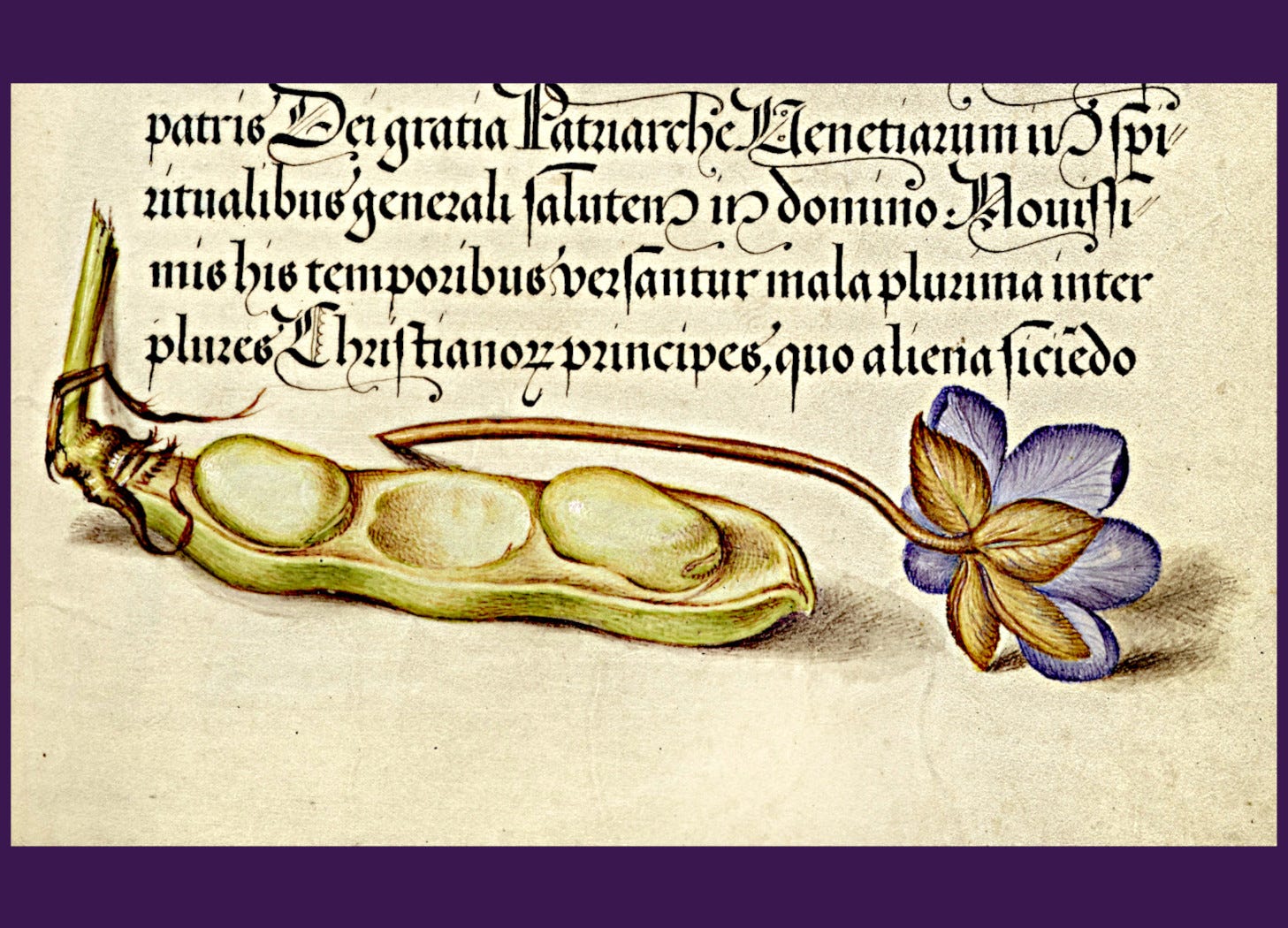
My recipe’s vegan ingredients recall pivotal episodes in David’s family and personal journey. More than one of these Biblical allusions directly relate to a question many of us have faced: Would I have ever existed if this or that did not happen? Fleeing from his usurping son, perhaps David reflected on the miraculous series of events leading to the moment he enjoyed hospitality that Shobi, Machir, and Barzillai offered in the wilderness.
***
Explorer’s Recommendation: Preparing the most complete version of this vegetarian meal requires additional components and hours of work. If you prefer a streamlined version, skip these extra recipes and go directly to the section entitled “Broad Beans and Barley.”
Leek Flag Stock
1 or 2 leek flags
2 onions, quartered
2 cloves garlic, crushed
Olive oil
Other vegetables, if desired
Cut the fan of deep green leaves away from the top of a leek’s mild-tasting white, or shank, section. Wash each leaf thoroughly and individually to remove any dirt, and cut into roughly two-inch segments. Separate the lightest green sections from the inner part of the washed leek flag. Sauté these more tender leaves with a drizzle of olive oil inside your pressure cooker. Use a little water to deglaze the pot after sections begin to brown. Cook them longer to develop the vegetable stock’s color. Include a roughly chopped onion, garlic, and other stock-building vegetables at this stage, if you wish. Add the remaining dark green leaves, and cover with water until the line is a little higher than the stock-infusing vegetables. Bring to temperature and seal the pressure cooker. Cook for an hour, then allow the pressure to dissipate naturally. Strain out vegetables, saving the clear broth. Chill then freeze to store, or add immediately to another recipe.
Mulberry Syrup
1 cup fresh mulberries
1 tablespoon honey
1 teaspoon vinegar of your choice, if desired
1 cup water
Mash mulberries in a pot to release juice and cook over medium heat for five minutes. Dissolve honey and, if you prefer, vinegar into the mixture. Add up to one cup of water and bring to a boil. Turn down heat and simmer. Reduce mixture by more than half, stirring occasionally. Strain out mulberry mash. Refrigerate remaining liquid to store for use within roughly one week, or add immediately to another recipe.
Mulberry Sauce
1/3 cup mulberry syrup, see above
1/4 cup fresh or frozen mulberries
1 teaspoon cinnamon
1 teaspoon corn starch, if desired
Bring syrup to a boil in small saucepan. Lower heat to simmer. Add remaining ingredients, and continue simmering while stirring occasionally for roughly ten minutes. Cook until thickened. Remove from heat. Enjoy with an entrée or hot side dish.
Broad Beans and Barley[iv]
1 cup pearled barley
2 pounds fresh broad, or fava, beans
2 onions
2 cloves garlic
1 leek
Olive oil
2-4 teaspoons coriander
Salt to taste
Rinse barley thoroughly. Add four cups of water and washed barley to a pressure cooker. Bring to temperature and cook on high heat for 23 to 25 minutes. While waiting to allow the steam to release on its own, process the beans.
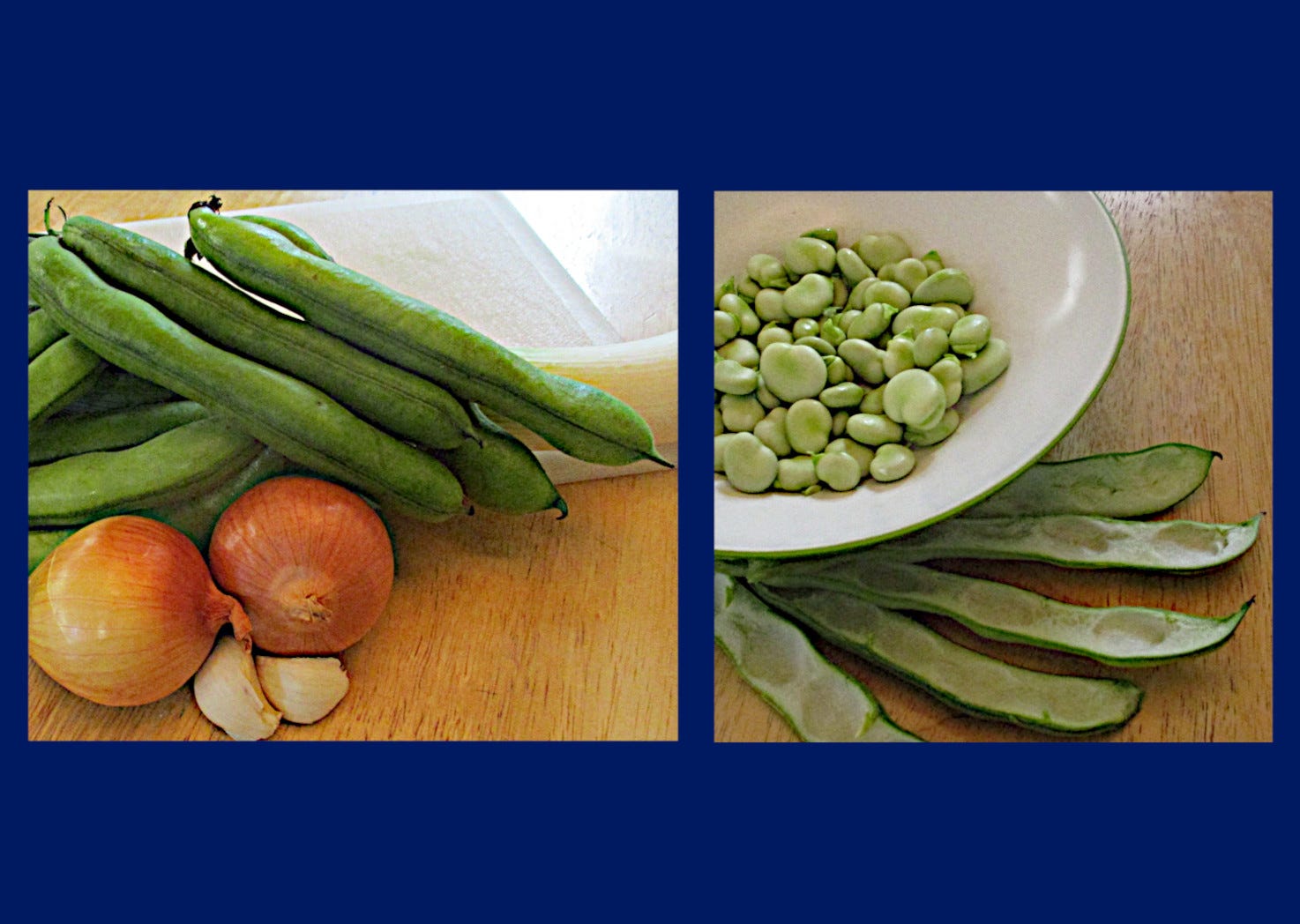
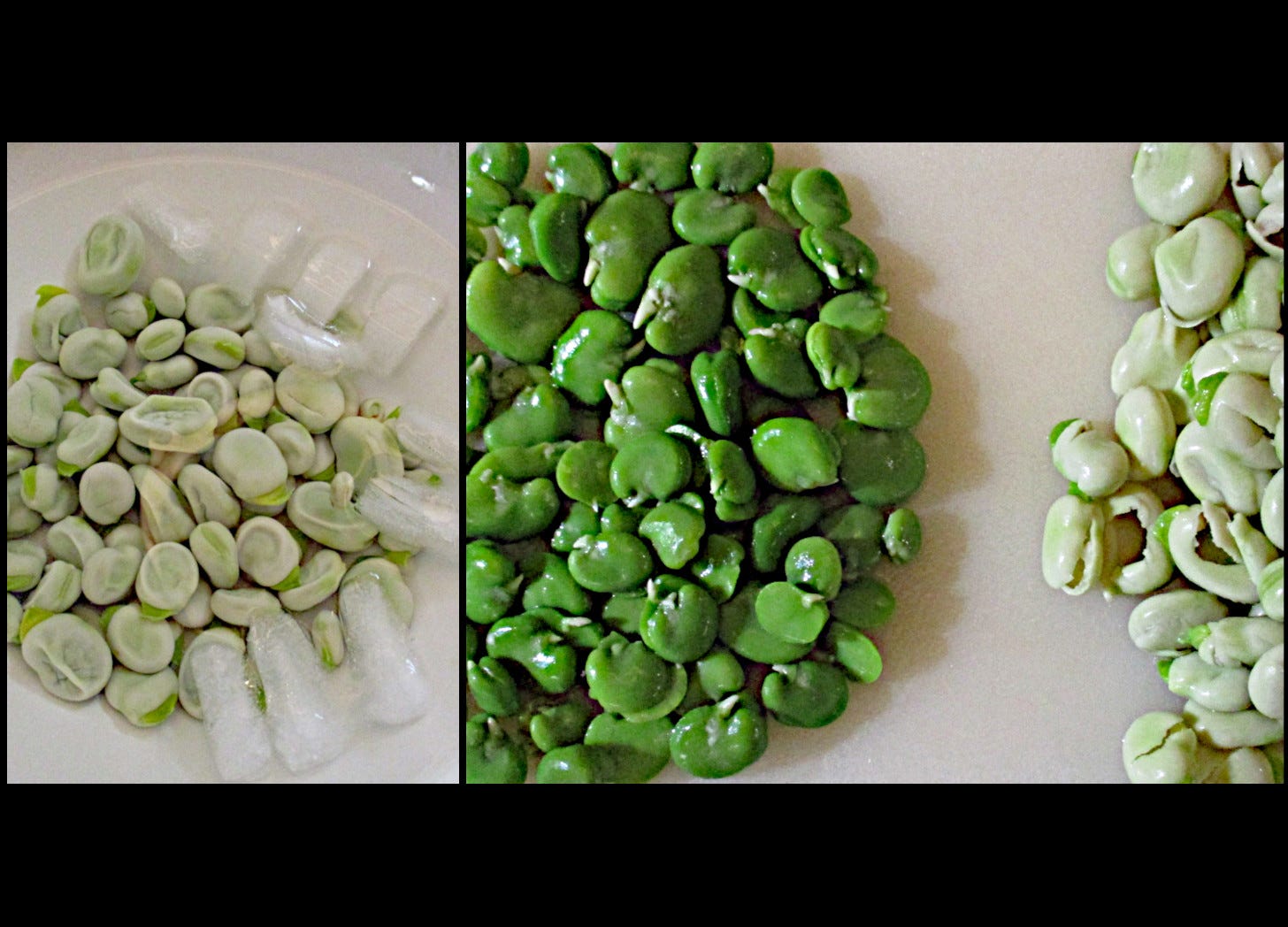
Shell broad beans (images above). Boil three to five minutes in more than enough water to cover the beans. Drain and transfer beans immediately into a bowl of ice water (see below). Peel off the outer skin, and set aside.
Chop onions, garlic, and the leek. Drizzle olive oil in a pan (note below left). Sauté the chopped ingredients until they start to brown. Deglaze pan with a little water, or leek flag stock from the first bonus recipe above, and stir until absorbed.
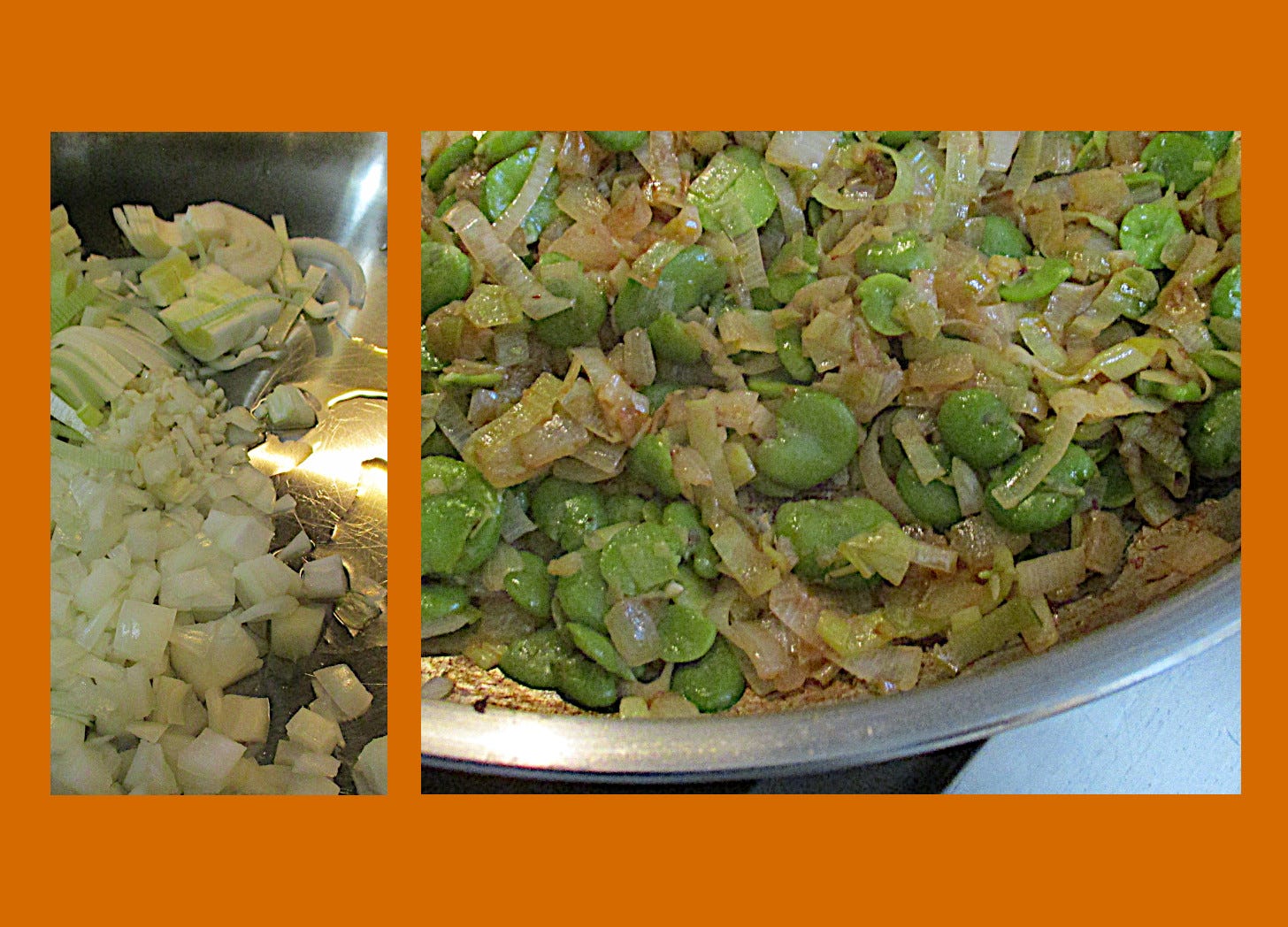
Add broad beans and coriander. Sauté for three to five minutes, deglazing again, while developing caramelization (image above right). Salt to taste. Remove from heat.
Drain the barley’s excess water. Serve broad bean mixture hot over barley. Add warm mulberry sauce, if desired (see below).
[i] Other articles on my Substack utilizing honey include: https://vernacularbibleexplorer.substack.com/p/explorers-fuel-series-ed8 and https://vernacularbibleexplorer.substack.com/p/explorers-fuel-series-98e, accessed July 2026.
[ii] Experts tie these Biblical references to this specific type of bean: https://www.internationalstandardbible.com/B/beans.html. The crop is present in non-Biblical ancient accounts: https://www.biblicalcyclopedia.com/B/bean.html and https://www.mofga.org/resources/beans/fava-beans/, accessed July 2026.
[iii] Joris Hoefnagel, scribe, and Georg Bocskay, illuminator, Mira calligraphiae monumenta, MS 20, f. 103r, Hungary, 1561-62 and 1591-96, no. 86.MV.527.103. Many thanks for the image of this public domain work courtesy of the J. Paul Getty Museum, Los Angeles: https://www.getty.edu/art/collection/object/105TN9 and https://www.getty.edu/art/collection/object/103RWD, accessed July 2026.
[iv] All recipe photographs by the author.
This looks good and I will have to try to this. Thank you for sharing.
Very fascinating!! Will have to try these