

Arkansas
Episodes in U.S. Bible History

Arkansas entered the union on 15 June 1836. Although surveys of Bibles printed in America are typically silent about this state,[i] unique witnesses are available. Books published elsewhere rendered Scripture into one of its region’s historic languages and Biblical manuscript sources have been preserved by its institutions.
Native American Quapaw, Caddo, and Osage peoples lived in the area now known as Arkansas.[ii] Unfortunately, languages associated with the first two are considered extinct.[iii] The Osage also flourished in areas that currently belong to different states. For simplicity’s sake, my series will consider an example from their existing Scripture resources here.
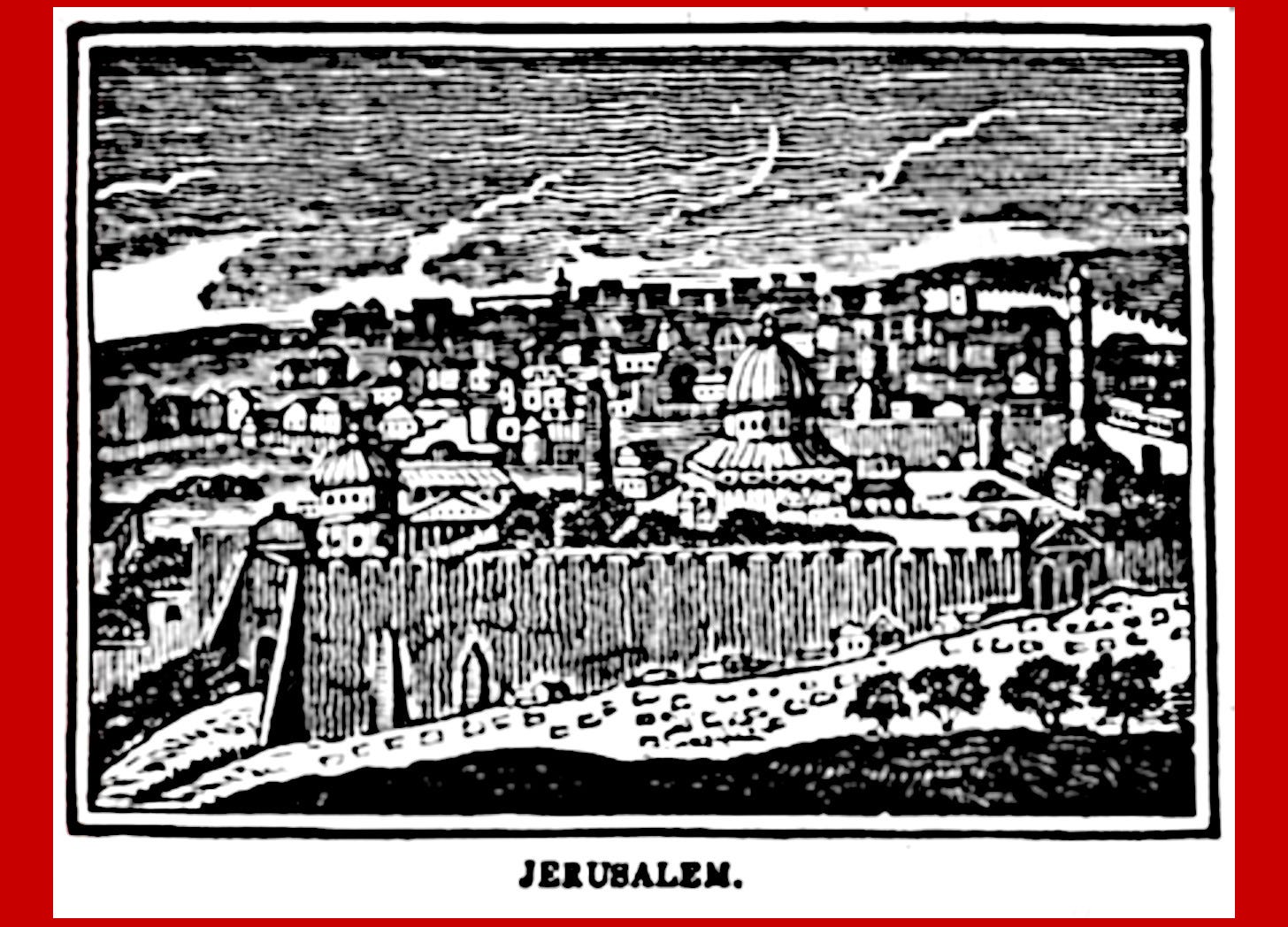
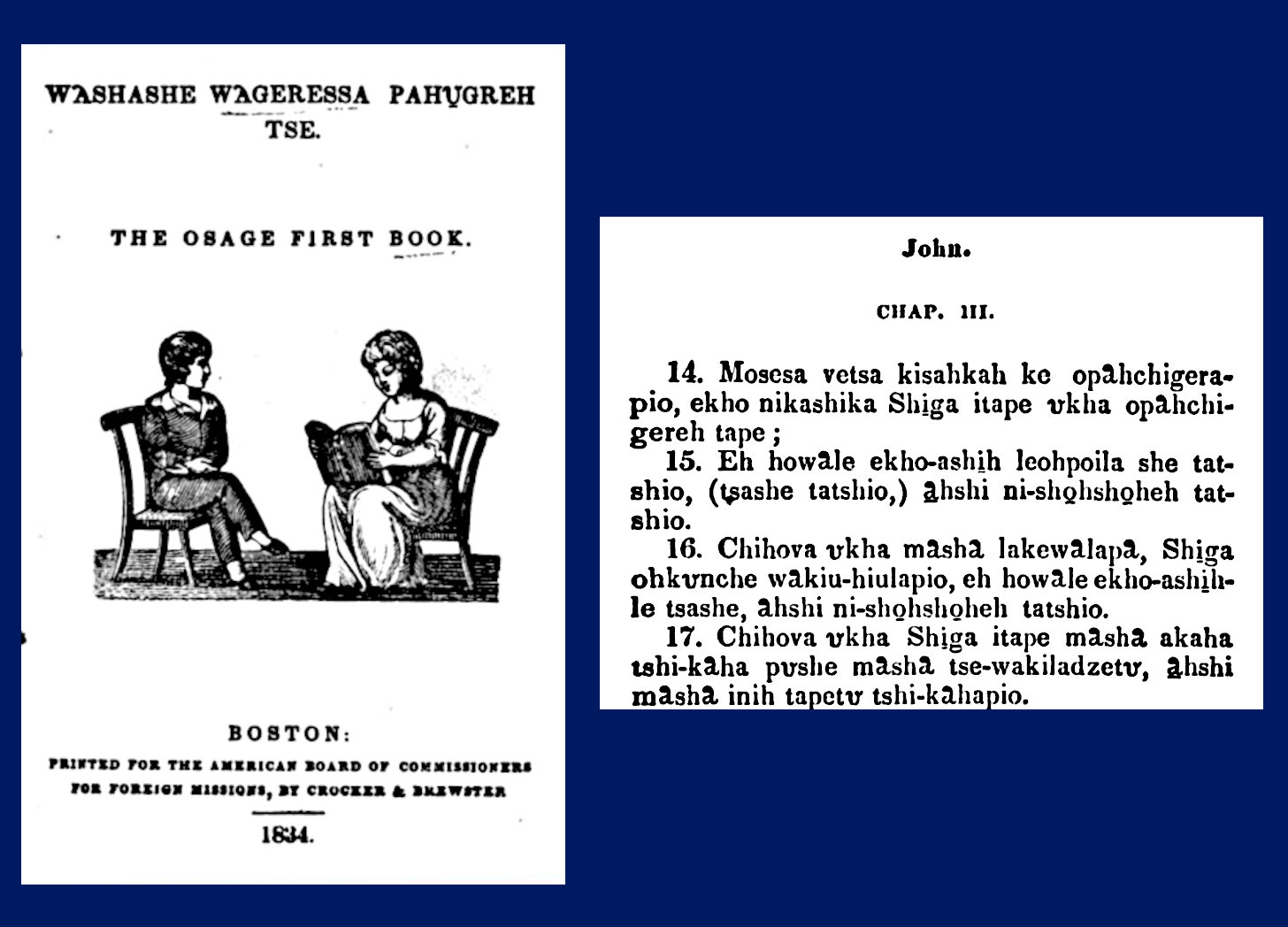
Uriel Crocker (1796-1887) and Osmyn Brewster (1797-1889) of Boston printed the Osage First Book (1834).[iv] The American Board of Commissioners for Foreign Missions[v] supported this work that supplied basic vocabulary and grammar in the Osage language, using Roman letters. It included Scripture passages from Genesis, Exodus, Proverbs, Isaiah, all four Gospels, Romans, and I John. These excerpts were most often illustrated with scenes thematizing education, but an engraving of Jerusalem provided some historical context (see below).[vi]
Verses translated from the Book of John featured Jesus’ conversation with Nicodemus (image below right).[vii] The Apostle-Evangelist summarized their discussion, “For God so loved the world, that He gave His only begotten Son, that whoever believes in Him shall not perish, but have eternal life. For God did not send the Son into the world to judge the world, but that the world might be saved through Him” (John 3:16-17, LSB). A former Osage Nation Language Department director, Dr Herman Mongrain Lookout, developed a new writing system about two decades ago.[viii] Since Osage speakers still only enjoy translated Bible selections, perhaps specialists will use one of North America’s newest alphabets to expand upon the 1834 work and publish entire books of Scripture.
Fayetteville’s University of Arkansas Special Collections library conserves medieval manuscript leaves with vernacular Biblical texts. Clear litterae textualis formata writing used in a Northern French mass book facilitated reading these Scripture passages and prayers for church services throughout the year (photograph below left).[ix] This folio shows a section from one of the Apostle Paul’s letters to read on the tenth week after Trinity Sunday: “Therefore I inform you that no one who is speaking by the Spirit of God calls Jesus accursed, and no one can call Jesus Lord, except by the Holy Spirit” (I Corinthians 12:3, MSB).[x]
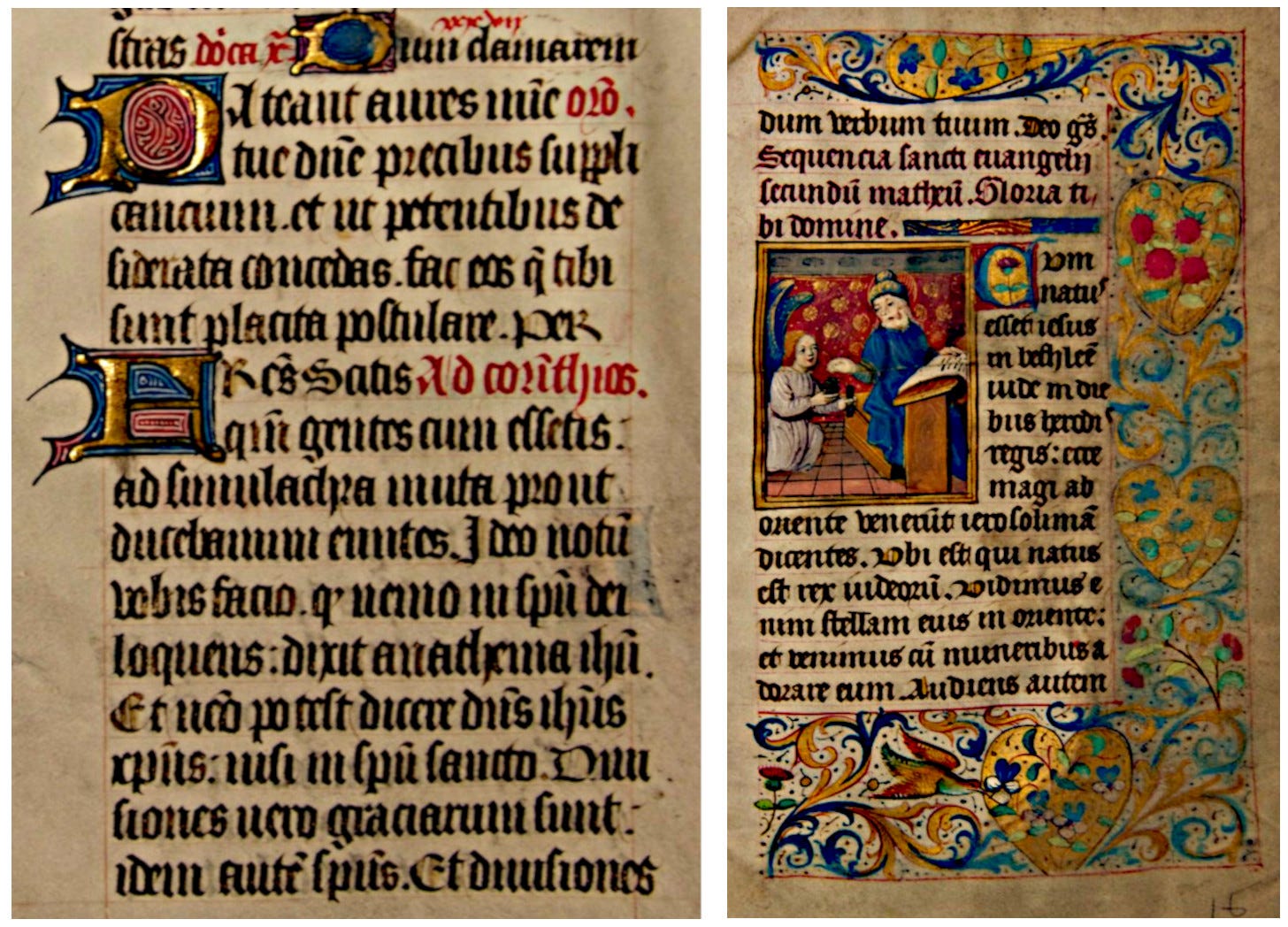
The university also has a leaf from somebody’s personal, fifteenth-century prayer book (see above right).[xi] Its elaborate borders are filled with flowers, fruit, a bird, scrolling acanthus leaves, and gilding. One Gospel pericope’s opening miniature depicts the Apostle Matthew writing a scroll and attended by his angel, or Evangelist symbol.[xii] The English translation begins: “Now after Jesus was born in Bethlehem of Judea in the days of Herod the king, behold, wise men from the east came to Jerusalem” (Matthew 2:1, ESV).[xiii] Please add any specific examples you are familiar with from Bible history in Arkansas to help round out the discussion. I invite readers to share other comments on this post’s topic.
[i] If you have read wide-ranging U.S. Bible histories that comprehensively studied sources connected to Arkansas, please cite them in the comments. Printing experts appear systematically to skip this region, but their literature is too vast to post a complete survey here. No references are found in Margaret Hills, ed., The English Bible in America (New York: American Bible Society and New York Public Library, 1961). Another overview is silent: http://www.biblecollectors.org/articles/early_american_bibles.htm. A useful site surveying American Bibles in honor of the country’s 250th anniversary also does not include the word Arkansas: https://celebratethebible250.com/. Please, however, note Arkansas’s representation in Melissa Conway and Lisa Fagin Davis’s survey of manuscripts, https://www.journals.uchicago.edu/doi/full/10.1086/682342#, and the latter’s research travel blog at: https://manuscriptroadtrip.wordpress.com/2014/05/17/manuscript-road-trip-heading-south/, accessed June 2026.
[ii] https://encyclopediaofarkansas.net/media/indian-territorial-extents-1750-6341/, accessed June 2026.
[iii] https://find.bible/languages/qua/; https://www.joshuaproject.net/languages/qua; and https://find.bible/languages/cad/, accessed June 2026.
[iv] Crocker’s obituary is online at: https://www.newspapers.com/article/the-new-york-times-uriel-crocker-dead/67527262/; Brewster’s life dates are from: https://ancestors.familysearch.org/en/LYKN-3CL/osmyn-brewster-1797-1889; https://books.google.com/books?id=iNFUAAAAcAAJ&pg=PA5&source=gbs_toc_r&cad=2#v=onepage&q&f=false, accessed June 2026.
[v] Harvard keeps sources detailing this group’s history: https://library.harvard.edu/collections/american-board-commissioners-foreign-missions-archives, accessed June 2026.
[vi] See the public domain image on p. 54 at: https://books.google.com/books?id=iNFUAAAAcAAJ&pg=PA5&source=gbs_toc_r&cad=2#v=onepage&q&f=false, accessed June 2026.
[vii] Search for this public domain text on p. 97, and note the title on p. 2: https://books.google.com/books?id=iNFUAAAAcAAJ&pg=PA5&source=gbs_toc_r&cad=2#v=onepage&q&f=false, accessed June 2026.
[viii] https://www.osageculture.com/language; https://www.omniglot.com/writing/osage.htm; https://www.typotheque.com/articles/in-support-of-osage-typography; and note these resources for kids: https://kids.kiddle.co/Osage_script, accessed June 2026.
[ix] A quick introduction to standard types of medieval calligraphy, or paleography, is found here: https://historyofthebook.mml.ox.ac.uk/palaeography-101-understanding-dismantling-and-deciphering-the-codex/. Many thanks for the image of a public domain work at: https://manuscriptroadtrip.wordpress.com/wp-content/uploads/2014/05/folio-4r.jpg, accessed June 2026.
[x] The manuscript says: “Ideo notum vobis facio, quod nemo in [S]piritu [D]ei loquens: dixit anathema [I]esu. Et nemo potest dicere [D]ominus [I]esus [C]hristus: nisi in [S]piritu [S]ancto.” It is similar to the current Vulgate: https://biblehub.com/vul/1_corinthians/12.htm, accessed June 2026.
[xi] Note https://manuscriptroadtrip.wordpress.com/2014/05/17/manuscript-road-trip-heading-south/. Grateful for the public domain image posted: https://manuscriptroadtrip.wordpress.com/wp-content/uploads/2014/05/folio-10a-r.jpg, accessed June 2026.
[xii] For more on Gospel pericopes, check out my article: https://vernacularbibleexplorer.substack.com/p/explorers-challenge-series-e78, accessed June 2026.
[xiii] The Latin incipit reads: “Cum natus esset [I]esus in [B]ethleem [I]ude in diebus [H]erodis regis: ecce magi ab oriente venerunt [I]erosolimam.” This stays very close to the modern Vulgate: https://biblehub.com/vul/matthew/2.htm, accessed June 2026.
If my publishing schedule had been different, I might have included a reference to the upcoming Grandma Moses exhibit at the Crystal Bridges Museum of American Art. If you'll be in Arkansas at any time from mid-September through late March, please check out the work of this Christian folk artist: https://crystalbridges.org/events/grandma-moses-a-good-days-work. Her rainbow painting might have been intended to reference Genesis. You can find it integrated into a children’s book about her: https://jusclassical.com/grandma-moses-biography-for-kids/.